Showing posts with label I-94. Show all posts

Monday, October 17, 2016

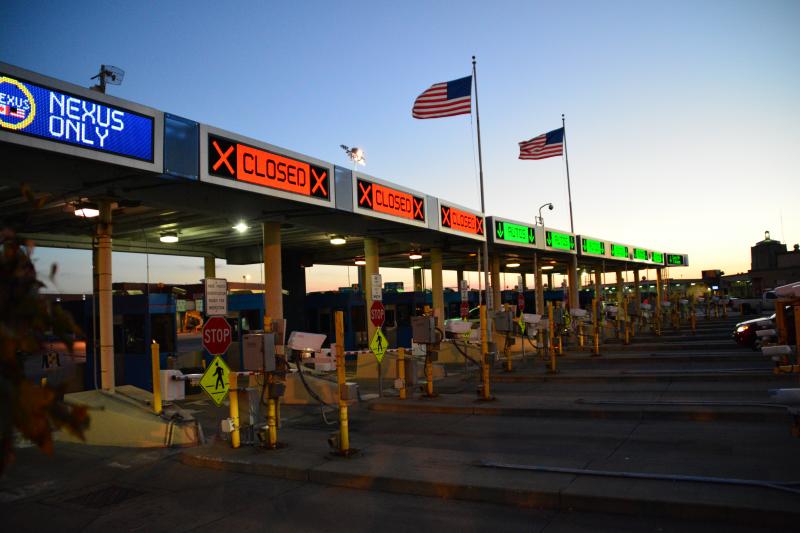
Online I-94 Application Now Available for Travelers at Land Ports of Entry

From GreenbergTraurig, 10/12/2016

On Sept. 29, 2016, U.S. Customs and Border Protection (CBP) announced that it has enhanced the I-94 website for travelers arriving to the United States at land ports of entry.  Travelers now can apply and pay the $6 fee for their I-94 card online up to seven days prior to their entry.
An I-94 form is needed by all persons except U.S. Citizens, returning resident aliens, aliens with immigrant visas, and most Canadian citizens visiting or in transit.  Air and sea travelers will continue to be issued I-94 records during the admission process at the port of entry.  However, for those travelers seeking admission to the United States at a land port of entry, taking advantage of this new enhancement will quicken and simplify the admission process.
The application requires travelers to submit their biographic and travel information; in return, they will receive a provisional I-94 card after submitting the application and payment of the fee online.  The application collects the information that would otherwise be collected during the in-person inspection at the land port of entry, including name, date of birth, country of citizenship, passport details, visa details (if applicable), and petition/SEVIS number (if applicable).  To finalize the I-94 issuance process and admission, the traveler must present him or herself at the land port of entry within seven (7) days of the application, submit biometrics, and be inspected by a CBP officer.  Travelers always should be prepared to show evidence of their residence, employment and/or travel plans to the inspecting CBP officer, depending on the category of nonimmigrant admission being sought.
CBP expects for the new online I-94 application process to increase efficiencies during inspection and admission, decrease paper usage, and streamline the process at the land border, thereby reducing operating costs.  The secure website is easy to use and payment can be made via credit card, debit card, direct debit, or through PayPal.


Tuesday, May 20, 2014

DHS streamlines access to travel records for international students, visitors

From ice.gov, 05/20/2014

WASHINGTON — When international students and visitors travel to the United States, they receive a Form I-94, "Arrival/Departure Record," at their port of entry. The Form I-94 serves as evidence that they have been lawfully admitted to the United States. International students and visitors need this record to verify alien registration and immigration status and obtain employment authorization. New this month, these individuals can access their five year travel history on the Form I-94 website.
Previously, international students and visitors could only access their most recent I-94 arrival/departure record number online, and they had to file a Freedom of Information Act (FOIA) request for previous years' information.
International students and visitors can obtain their Form I-94 record by visiting U.S. Custom and Border Protection's (CBP) Form I-94 Web page. They must agree to the terms listed on the page. From there, they will be directed to the Form I-94 information page. They must enter their name, date of birth and passport information to retrieve their Form I-94 information. The Web page gives you the option to "Get Most Recent I-94" or "Get Travel History."
If you select "Get Most Recent I-94," the Web page will display your I-94 number, most recent date of entry, class of admission and admit until date. If you select "Get Travel History," you can access your last five years of travel history on the Form I-94. Both pages are printer-friendly.
"International students and visitors have been able to access their most recent I-94 arrival/departure record number on the Form I-94 Web page since April 2013," said Lou Farrell, director of the Student and Exchange Visitor Program (SEVP). "This new option streamlines the process for obtaining previous years' travel records and eliminates the need for these individuals to file a FOIA request."
"CBP has seen a steady growth in trade and travel in recent years – including a nearly nine percent increase in non-immigrant arrivals since 2011," said CBP Commissioner R. Gil Kerlikowske. "We continue to work to manage these growing volumes by automating processes, going paperless, and employing mobile technology to maximize our resources and ease processing times for the traveling public."
SEVP monitors approximately one million international students pursuing academic or vocational studies (F and M visa holders) in the United States and their dependents. It also certifies schools and programs that enroll these students. The U.S. Department of State monitors exchange visitors (J visa holders) and their dependents, and oversees exchange visitor programs.
Both agencies use SEVIS to protect national security by ensuring that students, visitors and schools comply with U.S. laws. SEVP also collects and shares SEVIS information with government partners, including CBP and U.S. Citizenship and Immigration Services, so only legitimate international students and exchange visitors gain entry into the United States.
HSI reviews potential SEVIS records for potential violations and refers cases with potential national security or public safety concerns to its field offices for further investigation. Additionally, SEVP's Analysis and Operations Center reviews student and school records for administrative compliance with federal regulations related to studying in the United States.
Learn more about SEVP at www.ICE.gov/SEVP.

Friday, April 25, 2014

Travel History Now Available for Foreign Nationals on I-94 Website

From the Council for Global Immigration, 04/24/2014

Foreign nationals are now able to document their travel history through CBP’s I-94 website.

To retrieve travel history, foreign nationals can go to the website and attest that they are obtaining records on their own behalf or as an authorized representative.  Users can access travel records for previous or expired passports going back up five years.


Tuesday, September 17, 2013

How to Locate Your Electronic I-94 Record

From www.shrm.org, 08/28/2013

Since the rollout of the automated I-94 card process, some foreign national travelers have been reporting problems retrieving their electronic I-94 record on the United States Customs and Border Protection (CBP) website.

As of April 30, 2013, CBP rolled out its program to automate the Form I-94 card process for foreign national travelers arriving into the U.S. via air or sea and to eliminate the paper I-94 admission cards. CBP is no longer issuing the paper Form I-94, but rather creating an electronic record of admission and stamping the foreign national’s passport. The passport stamp includes an annotation with the class of admission and duration of admission. The electronic record of admission may be accessed by a nonimmigrant foreign national at www.cbp.gov/I94.

Foreign nationals arriving at a land border continue to receive a paper Form I-94 from CBP.
Printing a record of the Form I-94 allows a foreign national to verify admission in the class and for the period of time indicated on the passport stamp. Additionally, having a paper printout facilitates applications for ancillary benefits, such as a driver’s license or a Social Security number.

Although CBP has announced that it has fully implemented this new system, some travelers have been experiencing problems in being able to locate their electronic I-94 Form in the new automated system. CBP provides useful information on its FAQ page. However, not all situations have been addressed by CBP in its instructions.

Electronic I-94 Retrieval Issues
If an individual cannot locate a record at www.cbp.gov/I94 or if the information at that site does not correlate with the passport admission stamp and written notation of class and term of admission made by CBP at the port of entry (POE), the foreign national should verify that the correct name as it appears in the passport has been entered on the website. The FAQ page instructs individuals to enter the first and last names as they appear on the “travel document” used to gain admission to the U.S. CBP explained that the name on the passport, rather than the visa (if these are different), is required to access a record of admission.

If a nonimmigrant foreign national, refugee or parolee tries unsuccessfully to access a record of admission online, or finds a discrepancy between the electronic record and the notation in the individual’s passport, CBP has recommended that the individual contact them through a deferred inspection office. CBP has advised that deferred inspection officers will continue to be the point of contact for resolving admissions errors.

Before contacting the deferred inspection office, CBP has provided additional instructions to assist foreign nationals in obtaining the Form I-94 out of the CBP automation system. If a foreign national cannot locate the Form I-94 on the CBP website, and instead, receives a “Not Found” message, it is possible that the Form I-94 does not exist because of a system error. However, it is more likely that the Form I-94 is in the CBP system, but the data is formatted differently than the foreign national entered it, so the I-94 is “hiding.”

Ensure data is entered correctly in all applicable fields:

Enter the name as stated in the passport, visa or submitted Form DS-160. Although CBP has stated it would draw the name for the Form I-94 from the travel document (e.g., passport biographic page), that is not always the case. The instructions on CBP’s website state that the name is drawn from the visa, if any. Therefore, check the passport, visa and a copy of the submitted Form DS-160 (if available) for name variations. The foreign national should attempt to enter the name as stated on each document.

Enter the first and middle name in the first name field. In the first name field, type the first and the middle name (if any) with a space in between. Do this even if the middle name is not stated on the passport or visa.

Switch the order of the names. Switch the last and first name when entering the information on the website. Some countries state the name in the passport as first name, last name, rather than the more standard order of last name, first name. This may cause the name to be recorded incorrectly in the CBP system.
Enter multiple first names or multiple last names without spaces. If a person has two first names or two last names, type the first names without a space between them or the last names without a space between them. Example: type the first names “Mary Jane” as “Maryjane.”

Check for multiple passport numbers. Check the Form DS-160 (if available) for the passport number on which the person was admitted, and type the passport number as stated on the submitted Form DS-160. Also, check the passport number stated on the visa. If the passport number is different than the current passport, enter the passport number stated on the visa.

Do not enter the year if it is included in the passport number. Some passport numbers may begin with the year in which the passport was issued, causing the number to be too long for the relevant field in CBP’s automated system. If relevant, try entering the passport number without the year. For example, a Mexican passport that was issued in 2008 may have a passport number that starts with “08” followed by nine digits. Try entering the passport number without the “08.” This problem should not arise for newer Mexican passports, as those passports do not begin with the year.

Check the classification. Check the classification designated on the visa and compare it to the classification stated on the admission stamp in the passport, as there may be a slight variation. Be sure to try both designations. For example, the visa may state E-3D for an E-3 dependent, but the admission stamp may state only E-3. The automated I-94 could state the classification either way.

Call or Visit the Deferred Inspection Office
If none of the above efforts resolve the issue, telephone or visit the CBP Deferred Inspection Office and explain the problem. Some of the deferred inspection offices have been able to resolve the problem over the phone without an in-person visit; however, other offices may require an in-person visit with the nonimmigrant. Contact information for the deferred inspection offices can be found on CBP’s website.

Valerie A. Darling and Katheryn M.T. Wasylik are associate attorneys in the Minneapolis office of Faegre Baker Daniels.

© Copyright 2013 by Faegre Baker Daniels LLP. All rights reserved.

Thursday, April 25, 2013

New Computerized I-94 System Goes Live April 30

From Fragomen.com, 04/25/2013


Starting next week, foreign nationals will see new entry procedures at U.S. airports and sea ports, when Customs and Border Protection begins implementing a computerized I-94 arrival record system. The new system will replace the paper I-94 card that most foreign nationals currently receive on entry to the United States. 

The I-94 arrival record governs a foreign national’s terms and duration of stay in the United States and serves as evidence of lawful status. 

The following are some FAQs about the new computerized admission record and how it will affect entry procedures, I-9 and E-Verify employment eligibility verification and applications for benefits like Social Security numbers and driver’s licenses. If you have any questions about the new I-94 system, please contact your designated Fragomen professional. 

WHAT TO EXPECT FROM THE NEW ENTRY PROCEDURES 

1. When will the new system take effect? 

CBP will phase in the automated I-94 system over several weeks, starting on April 30, 2013. During the first week, the system will be implemented six international airports – Charlotte (NC) International Airport, Chicago O’Hare International Airport, Houston Bush Intercontinental Airport, Las Vegas International Airport, Miami International Airport and Orlando International Airport. 

After the first week, CBP will roll out the system to major air and sea ports by region. Air and sea ports in the New York/Newark, NJ area, Boston and ten other cities are expected to implement the system during the week of May 7. Ports in Los Angeles and San Francisco, among other regions, are to go online during the week of May 14, along with pre-flight clearance stations abroad. Implementation will continue at U.S. air and sea ports through the week of May 21. As with any new process, however, implementation could take longer than anticipated. 

2. How will entry procedures change under the new system? 

Currently, CBP issues a paper Form I-94 card to most foreign nationals arriving in the United States on a nonimmigrant visa. The I-94 card, which is often stapled into the passport, lists the person’s nonimmigrant category, the expiration date of the stay, and a unique identifying number. CBP forwards each traveler’s admission information from the port of entry to a central office, where it is manually entered in the agency’s database – a process that can take 30 to 60 days. 

When the computerized system is fully implemented, most foreign travelers entering by air or sea will receive a stamp in their passport rather than a paper I-94 card. Their immigration category and period of stay will be recorded immediately in CBP’s database. The database will also contain the traveler’s basic biographic, passport and visa information, collected from the advance passenger manifests that air and sea carriers must transmit to CBP before departure for the United States. 

Not all foreign nationals will be subject to the new system. Parolees, asylees and refugees will still receive a paper I-94 card when entering the United States, as will travelers at land border ports of entry. 

3. I am a foreign national planning to enter the United States on a nonimmigrant visa. What should I expect during the inspection process at a U.S. airport or sea port after the computerized I-94 is implemented? 

As always, you will be inspected by a Customs and Border Protection officer. If you are admitted, the officer will place an admission stamp in your passport, and will hand write your date of entry, your class of admission and the date your stay expires into your passport. The officer will also give you a leaflet with instructions on how to get a paper printout of your CBP admission record. 

Before you step away from the admission counter, take a moment to check the date of entry, class of admission and expiration date written in your passport. If you notice an error, politely inform the officer. Checking your admission stamp before you leave the inspection area can help minimize problems and delays later on. 

4. How do I obtain a printout of my I-94 admission record? 

CBP has established a dedicated website, www.cbp.gov/i94, for accessing I-94 admission records. If you last entered the United States by air or sea after April 26, 2011, your admission record should appear in the system. (The website is set to go live on April 30. Until then, a demonstration of the new system is available at the I-94 website.) 

When you visit www.cbp.gov/i94, you will be asked to enter your first and last name, date of birth, passport number, country of passport issuance, date of entry and class of admission. Enter the information as it appears on your visa stamp and your admission stamp. If you do not have a visa, enter the information as it appears on your passport biographic page. If your record appears in CBP’s database, the website will generate an I-94 that contains your admission information and a unique admission number. 

We recommend that you make several copies of your admission record – one to present to your employer during the I-9 employment verification process; one or more for use when you apply for a Social Security number and/or state driver’s license; and one to keep with your passport. Please also make sure to send one to your designated Fragomen professional, who will need a copy of your I-94 if your employer applies to extend or change your immigration status. You will also need copies of your admission records if you seek permanent residence. 

5. What if I notice an error in my admission record after I enter the United States? 

If you notice an error in your online admission record or in your admission stamp after you leave the port of entry, notify your Fragomen professional as soon as possible. You will need to visit a CBP deferred inspection station or return to the port of entry to seek a correction. 

6. What if I lose my I-94 printout? 

If you lose your I-94 printout or need additional copies, simply visit www.cbp.gov/i94 to print out another. 

If you lose a traditional paper I-94 card, you may need to apply to USCIS on Form I-102 for a replacement. However, if you last entered the United States after April 26, 2011, your admission record may be available at www.cbp.gov/i94

7. What should I do with the printout of my computerized I-94 when I depart the United States? 

You can turn the I-94 printout in to CBP when you depart by air or sea, though you are not required to do so. CBP will be informed of your exit from the United States when your air or sea carrier transmits an advance passenger manifest before departure. Please remember to keep a copy of your I-94 printout for your records. (If you hold a traditional paper I-94 card, make sure to turn it in to CBP when you depart.) 

If you enter the United States by air or sea after the computerized I-94 system is implemented, but later make your final departure through a land port of entry, you should retain proof of your timely exit, such as an entry stamp from Canadian or Mexican immigration authorities, travel ticket stubs or similar evidence. 

8. I will be entering through a land border port of entry. Will the automated I-94 system be in effect there? 

No. CBP will continue to issue paper I-94 cards to travelers entering through land borders. If you receive a paper I-94 card from a land border port of entry, please forward a copy to your Fragomen professional. 

9. I entered the United States before the automated I-94 system took effect. Is my paper I-94 card still a valid document? 

Yes. Foreign nationals who received a traditional paper I-94 document at a port of entry or from USCIS should retain it as before. Your valid, unexpired I-94 card is evidence of your lawful status and period of stay in the United States. 

When you depart the United States, you must turn the I-94 card in to CBP. If you reenter the United States after the automated system takes effect, you will be processed under the new system. 

10. Current USCIS rules require all foreign nationals to carry documentation of their immigration status. How does the automated I-94 rule change that requirement? 

All foreign nationals are required by law to carry documentation of their immigration status. Form I-94 is one of the documents acceptable for this purpose. When the computerized I-94 system takes effect, acceptable evidence of lawful status will include the printout of the I-94 record and the unexpired admission stamp. Unexpired paper I-94s issued before automation took effect will remain valid for this purpose. 


EMPLOYMENT ELIGIBILITY VERIFICATION WITH THE AUTOMATED I-94 

11. Is an I-94 printout an acceptable document for Form I-9 and E-Verify employment verification? 

Yes, an I-94 printout from the CBP website is considered an original I-94 document. Employers may accept an I-94 printout, along with a foreign passport, as a List A document during the I-9 process. A valid, unexpired I-94 card issued by a port of entry or along with a USCIS Form I-797 approval notice can also be accepted with a foreign passport. 

12. Will the website printout be the only form of I-94 acceptable for employment verification? 

No. There are several forms of I-94 in circulation, depending on when the foreign national entered the United States or otherwise acquired his or her current status. 

Foreign nationals who last entered the United States before the automated system took effect will hold a traditional paper I-94 card. After automation, the paper card will still be issued to foreign nationals entering through land border ports of entry and to parolees, asylees and refugees. 

If a foreign national changed or extended his nonimmigrant status from within the United States, he or she will be issued a paper I-94 card attached to a USCIS approval notice. 

Nonimmigrants who are members of the Global Entry trusted traveler program will continue to receive an I-94 receipt when they complete arrival processing through a Global Entry kiosk. 

For samples of the various forms of I-94, click here.


APPLYING FOR BENEFITS WITH THE AUTOMATED I-94 

13. I am applying for a U.S. Social Security number. Will the Social Security Administration accept an I-94 printout as documentation of my lawful status? 

Yes, the I-94 printout is acceptable to document your lawful status in connection with a Social Security number application. The SSA will also accept a copy of the admission stamp in your passport, but prefers to receive an I-94 printout or card because the unique admission number on the I-94 helps it verify your immigration status more quickly. 

14. I am applying for a state driver’s license. Will the Department of Motor Vehicles accept an I-94 printout as documentation of my lawful status? 

It depends on the specific requirements of the state Department of Motor Vehicles. Some may accept a copy of the admission stamp in your passport, while others will require an I-94 printout or card. As noted above, we recommend that you print out an I-94 admission record to use when you apply for a driver’s license or other government benefit.

Monday, April 15, 2013

Frequently Asked Questions: I-94 Arrival/Departure Record


The following FAQs and additional information can be found here: Arrival/Departure Forms: I-94 and I-94W

What is a Form I-94?
Form I-94 is the DHS Arrival/Departure Record issued to aliens who are admitted to the U.S., who are adjusting status while in the U.S. or extending their stay, among other things. A CBP officer generally attaches the I-94 to the non-immigrant visitor’s passport upon U.S. entry. The visitor must exit the U.S. on or before the departure date stamped on the I-94.

How will the new I-94 automation impact international travelers’ entry to the U.S.?
I-94 automation will not impact a traveler’s ability to enter the U.S. CBP will continue to create an I- 94 record for all travelers who require one, but the paper form will be created in an electronic format and not provided to the traveler. If a traveler requires a paper version of Form I-94, it will be available at www.cbp.gov/I94

Will CBP provide a traveler with any documentation or evidence showing status and time allowed in the U.S.?
Yes. CBP will provide each traveler with an admission stamp that is annotated with date of admission, class of admission and admitted until date. The electronic arrival/departure record can be obtained at www.cbp.gov/I94.

Will travelers need to do anything differently when exiting the U.S.? How can they be sure their departure will be recorded properly with this new the I-94 automation process?
Travelers will not need to do anything differently upon exiting the U.S. Travelers issued a paper Form I-94 should surrender it to the commercial carrier or CBP upon departure. The departure will be recorded electronically with manifest information provided by the carrier or by CBP. If travelers did not receive a paper Form I-94 and the record was created electronically, CBP will record their departure using manifest information obtained from the carrier.

How does a traveler revalidate a visa without their I-94?
The I-94 admission record is created electronically and maintained in CBP systems. CBP will verify the I-94 electronically to re-validate an expired visa if the traveler meets the conditions of automatic revalidation. If entry occurred prior to automation, a paper form must be presented in order to comply with validation requirements. 

Will CBP still issue a paper Form I-94 once the automation begins?
No. Rather than distributing a paper Form I-94, CBP will scan a traveler’s passport, generating an electronic arrival record with data elements found on the current paper Form I-94. CBP will make the electronic I-94 available at www.cbp.gov/I94. Travelers may visit this website to print their electronic I-94 number before applying for immigration or public benefits, such as a driver’s license or a Social Security number. Since automation only affects air and sea arrivals, a paper Form I-94 is still issued at the land border ports of entry. Also, CBP intends to continue to provide a paper Form I-94 to certain classes of aliens, such as refugees, certain asylees and parolees, and whenever CBP determines the issuance of a paper form is appropriate.

What should a traveler do if he or she was admitted incorrectly to the U.S.?
If an applicant was admitted incorrectly to the U.S., the applicant should visit a local CBP Deferred Inspection Site or port of entry to have his or her admission corrected. A list of Deferred Inspection Sites and ports of entry can be found at www.cbp.gov, under the “Ports” link at the bottom of the page. If an applicant received an incorrect I-94 from U.S. Citizenship and Immigration Services, the applicant should refer to Form I-102 available at www.uscis.gov/ forms.

Will the process help expedite passenger processing time?
The I-94 automation will expedite passenger processing. CBP automated the I-94W process in 2010, which independent studies show has resulted in an approximate 20- second time savings per passenger. CBP estimates that I- 94 automation will result in similar time savings.

What is the I-94 website (www.cbp.gov/I94)?
Travelers may visit www.cbp.gov/I94 to retrieve their electronic I-94 number. Upon entering the U.S., travelers will receive a paper with instructions on how to access the website.

CBP to Rollout New Arrival/Departure-Record Process for Foreign Visitors

From CBP.gov, 04/02/2013


Foreign visitors arriving in the U.S.—only via air or sea—who need to prove their legal-visitor status—to employers, schools/universities or government agencies—will be able to access their U.S. Customs and Border Protection arrival/departure record information online when the agency starts its records automation on April 30, 2013.

When the electronic rollout begins April 30, CBP will no longer require international non-immigrant visitors to fill out a paper Form I-94 Arrival/Departure Record upon arrival to the U.S. by air or sea. The agency will gather travelers’ arrival/departure information automatically from their electronic travel records. This automation will streamline the entry process for travelers, facilitate security and reduce federal costs. CBP anticipates that the automated process will save the agency an estimated $15.5 million a year. 

Because advance information is only transmitted for air and sea travelers, CBP will still issue a paper form I-94 at land border ports of entry.

CBP will phase-in the Form I-94 automation at air and sea ports of entry through April and May. Foreign visitors will continue to receive the paper Form I-94 until the automated process arrives at their port of entry. Following automation, if travelers need the information from their Form I-94 admission record to verify immigration status or employment authorization, the record number and other admission information will be available at CBP.gov/I94.

With the new CBP process, a CBP officer will stamp the travel document of each arriving non-immigrant traveler. The admission stamp will show the date of admission, class of admission, and the date that the traveler is admitted until. Travelers will also receive on arrival a flier alerting them to go to CBP.gov/I94 for their admission record information.

Travelers will not need to do anything differently upon exiting the U.S. Travelers previously issued a paper Form I-94 would surrender it to the commercial carrier or to CBP upon departure. If travelers did not receive a paper Form I-94, CBP will record the departure electronically via manifest information provided by the carrier or by CBP.

PLEASE NOTE: CBP.gov/I94 will not be live until the end of April, 2013.

Implementation Schedule 

Implementation will begin on April 30 at five pilot ports of entry and will continue to the remaining ports of entry over a total of four weeks.

Week 1
04/30/2013
Charlotte Douglas International Airport, Orlando International Airport, Las Vegas Airport, Chicago O’Hare and Miami International Airport
Week 2
05/07/2013
Major Air and Sea Ports within the following field offices:
New York, Boston, Buffalo, Baltimore, Detroit, Atlanta, Tampa, Puerto Rico, Miami, Chicago, New Orleans and Houston

Week 3
05/14/2013
Major Air and Sea ports within the following field offices:
Pre-Clearance, San Francisco (includes Hawaii and Guam), Tucson, El Paso, Seattle, Portland (includes Alaska), Los Angeles, San Diego and Laredo

Week 4
05/21/2013
All remaining airports and seaports